STEM in Boy Scouts






What is STEM?
(updated Mon. Oct. 3, 2016)
What is STEM?
“STEM is part of an initiative the
Boy Scouts of America has taken on
to encourage the natural curiosity of
youth members and their sense of
wonder about these fields through
existing programs. From archery to
welding, Scouts can’t help but enjoy
the wide range of STEM-related activities. To support this initiative, the BSA developed the Nova Awards program so that youth members have fun and receive recognition for their efforts.”
source: http://stlbsa.org/activities/other-activities/stem/
Why STEM?
“We live in a time of great opportunity. The spirit of innovation can help us overcome challenges and ensure a prosperous and secure future. To seize this opportunity, we must position ourselves at the cutting edge of scientific discovery and technological innovation.
Yet our country is falling behind in science, technology, engineering and mathematics. This is why many professionals and educators in science, technology, engineering, and mathematics believe the United States should do more now than ever to encourage students to enter STEM-related fields. These experts say our young people need strong STEM skills to compete in the world market. We must work together to cultivate the next generation of critical thinkers and innovators.”
source: http://www.scouting.org/stem/AboutSTEM.aspx
----------------------------------------------------------------------------------------
STEM stands for:
S - Science
T - Technology
E - Engineering
M - Math
When I started learning more about the STEM program, I realized I was challenged providing a simple definition of each of the items - Science, Technology, Engineering, and Math, so I looked them up on M-W.com / http://www.merriam-webster.com
In the order of how they build on one another,
their definitions are:
Math - the science of numbers and what they mean
Science - learning about God’s world through the use of the scientific method.
The scientific method:
-
1)Problem or Question
-
2)Information gathering
-
3)Hypothesis creation
-
4)Experiment
-
5)Data Gathering and Analysis
-
6)Conclusion
Technology - the practical application of knowledge in a particular area
Low Tech
“simple or unsophisticated”
See: http://www.merriam-webster.com/dictionary/low%20tech
and http://en.wikipedia.org/wiki/Low-technology
High Tech
uses “advanced or sophisticated devices especially in the fields of electronics and computers“
See http://www.merriam-webster.com/dictionary/high+technology
and http://en.wikipedia.org/wiki/Hi-tech
Engineering - the application of science and math, through which matter and energy in nature, are made useful to people
As shared by several engineers: “Engineers are problem solvers.”
----------------------------------------------------------------------------------------
What are STEM Novas and SuperNovas?
Nova Program
-
-Based on accomplishment of existing program activities
-
-Extends and enhances existing program activities
-
-Adult counselors familiar with STEM topics guide explorations and program advancement quality control
Nova awards are “like Merit Badges.”
There are currently four Boy Scout Novas, with others planned.
-
-S / Science - Shoot!... involves learning about projectiles, culminating in building a) a catapult -or- b) a pitching machine -or- c) a marble run/roller coaster and determining how to best make the projectile go the farthest... while recording data
-
-T / Technology - Start Your Engines!... involves learning about transportation, culminating in designing and building a car (not from a pre-made kit) that is a) solar powered -or- b) wind powered -or- c) battery powered.
-
-E / Engineering - Whoosh!... involves learning about motion-inspired technology, and simple machines, culminating in designing the Scout’s own a) amusement park ride -or- b) playground fixture -or- c) method of transportation.
One example of a simple machine is found in this book,...
SMASH! Wile E. Coyote Experiments with Simple Machines
by Mark Weakling
illustrated by Christian Cornia
... which we found at the St. Louis County Library:
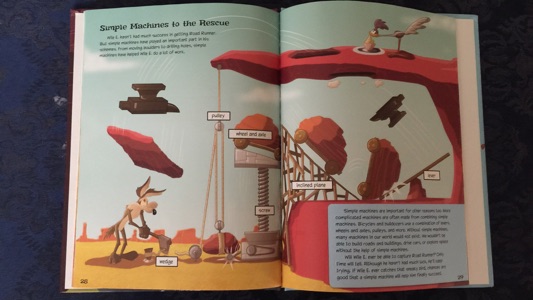
(Press Ctl-+ (control and plus) to zoom in your browser and you can read all the text on the page)
-
-M / Math... Designed to Crunch... involves learning about math, especially sports statistics, and horsepower, including calculating the horsepower each Scout generates when he walks up a flight of steps.
When a Boy Scout completes his first Nova, he earns the star-shaped Nova patch.
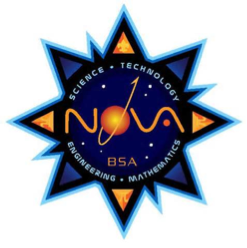
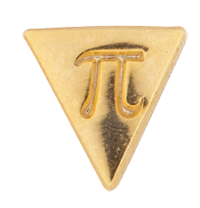
When he completes any/all later Novas, he earns a triangle-shaped Pi pin, to affix to the points of his Nova patch.
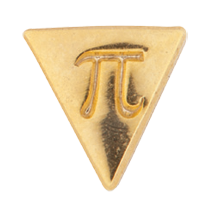
Nova patches are encouraged to be worn on the right pocket, especially at STEM-related events.
SuperNova Program
-
-Significant accomplishment of existing activities
-
-Learn some fundamentals of the topic areas
-
-Original STEM investigations and projects
-
-Adult mentors who are accomplished STEM practitioners guide explorations and provide advancement quality control.
Supernova awards are “like Eagle Scout projects.”
The two Boy Scout SuperNovas are:
-
-Dr. Bernard Harris SuperNova
-
-Thomas Edison SuperNova
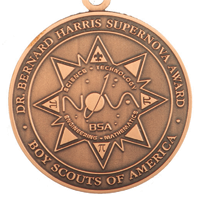
Scouts who earn SuperNova awards receive a medal:
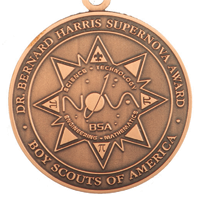
Thank you, Doctors Colletti, for these explanations and for being such strong STEM advocates and teachers!
Details about the Boy Scout Nova and Super Nova awards are provide at:
http://www.scouting.org/stem/Awards/BoyScouts.aspx
Thanks to the great, dedicated efforts of many many people in GSLAC / the Greater St. Louis Area Council, St. Louis can proudly boast that we have
-
-more Novas earned within GSLAC than the entire rest of the USA!
-
-more SuperNovas earned within GSLAC than the entire rest of the USA!
This progress by Scouts is made possible through the dedication of countless STEM Counselors and STEM Mentors, and in part, to the STEM U one-day sessions and STEM Camps hosted by GSLAC.
Information about becoming a Counselor, a Mentor, and STEM Universities and STEM Camp are available at: http://stlbsa.org/activities/other-activities/stem/ .
----------------------------------------------------------------------------------------
Final thoughts.
Almost each and every one of us feels overwhelmed by the information we encounter every day,
and by the number of opportunities we, and our sons/Scouts (and daughters in Venturing) can participate in.
When I first heard about, and saw a STEM demo (mentos and a two liter of soda, at Millennium Park Camp, 2012), I felt like my “just entering Webelos mind” could barely comprehend the next 18 months of Webelos Activity Badges, and I truly could not absorb STEM. “My mental sponge was already over-saturated.”
You may have a similar reaction.
That’s ok.
The purpose of this page is to share a bit about STEM, to help any/all realize that, while it is possible a new thing to absorb, there are great materials to help your Scouts accomplish much to complete his Nova and SuperNova work, to earn the rewards, not just of patches and Pi pins and Medals, but of knowing more about the world around us, and about how to apply critical thinking to every day life.
If/when you are ready, do know that the STEM manual provides great in-print information, and also links to great websites to help you help the Scouts.
AND
there are many people in GSLAC ready to help your son/Scout.
So, work to absorb what you can... and talk with others... you’ll learn so much more that way.
----------------------------------------------------------------------------------------
Our son, Matt, who has earned 10 Cub Scout Novas and the Dr. Charles H. Townes Supernova, and who has now earned four (4) Boy Scout Novas and the Dr. Bernard Harris Supernova, and who has been a top popcorn seller in his Pack and Troop, and in St. Louis each year he has been in Scouts, has compiled some STEM facts about popcorn that he shares.
This section also includes a couple ideas shared by Dr. Lisa Balbes that you may you may want to try in your Unit.
(as seen also on http://vanvooren.us/BoyScouts/Popcorn.html)
POPCORN
Americans consume some 16 billion quarts of this whole grain, good-for-you treat. That’s 51 quarts per man, woman, and child.
• Compared to most snack foods, popcorn is low in calories. Air-popped popcorn has only 31 calories per cup. Oil-popped is only 55 per cup.
• Popcorn is a type of maize (or corn), a member of the grass family, and is scientifically known as Zea mays everta.
• Of the 6 types of maize/corn—pod, sweet, flour, dent, flint, and popcorn—only popcorn pops.
Popcorn is a whole grain.
Popcorn needs moisture to pop
Most popcorn is grown in the Midwest
Most corn is used in livestock feed
Popping popcorn is one of the number one uses for a microwave
Popcorn kernels can pop up to 3 feet in the air
The world’s largest popcorn ball was created by volunteers in Sac City, Iowa in February, 2009. It weighed 5,000 lbs., stood over 8 ft. tall, and measured 28.8 ft. in circumference
Website: http://www.popcorn.org/AboutUs/PopcornPoppinMonth/FunPopcornFacts/tabid/118/Default.aspx
STEM Popcorn Studies
Science – Very Long and many would not understand probably
Technology – A microwave is heated up to about 324 degrees Fahrenheit
Engineering – Ties in with Technology. People or machines build the parts to create a microwave and the microwave creates heat by the electrical current flowing faster than usual. Like if you put a battery with a wire shaved off touching both ends the battery will immediately heat up coming to hot to touch. PLEASE DO NOT DO THIS BECAUSE YOU CAN GET A THIRD DEGREE BURN, AND YOU WILL BE IN PAIN.
Math – By converting measures in temperatures like I did mentally in my formula is this.
I thought about how Celsius was based on a scale on 100
So I used the starting point of Celsius 32 degrees Fahrenheit, and the ending point 212 degrees Fahrenheit and I realized it has an 180 degrees difference so I thought for every 1 degree in Celsius is 1.8 degrees in Fahrenheit. So if it were 46 degrees in Celsius it would be 82.8 degrees in Fahrenheit. In my head I worked it out like this: since 46 is close to 45 I did 45 x 1.8 and I know 18 x 5 = 90 so it would be 9 with 1.8 x 5 and 9 x 9 + 1.8 for the extra 1. On a calculator it would look like 46 x 1.8 = 82.8 degrees Fahrenheit.
Popcorn STEM activities, as shared by Dr. Lisa Balbes:
STEM Activity Challenge Popcorn Huff and Puff 6th-8th grade
“Product Description
“S.T.E.M. (Science, Technology, Engineering & Math) classroom project for Middle School & Homeschool groups.
“Working in teams, students will attempt to blow a piece of popcorn into an "empty" 2 liter bottle. To their surprise, they will find that it doesn't work. Students will discuss this phenomenon with their team and attempt to explain it. Students will discover that the bottle is actually full...full of air! They will then brainstorm modifications that may allow the popcorn to be blown into the bottle.
“This kit includes teacher instructions, student instructions, grading rubrics, a demonstration video showing the teacher how to set up the activity with an explanation of the science involved and 2 pdfs of related Next Generation Science Standards.”
Build a tongue depressor catapult and see who can shoot unpopped kernels (or maybe popped!) at a target.
The target could be drawn on a piece of paper, or could be a cup or a bowl, etc.
----------------------------------------------------------------------------------------